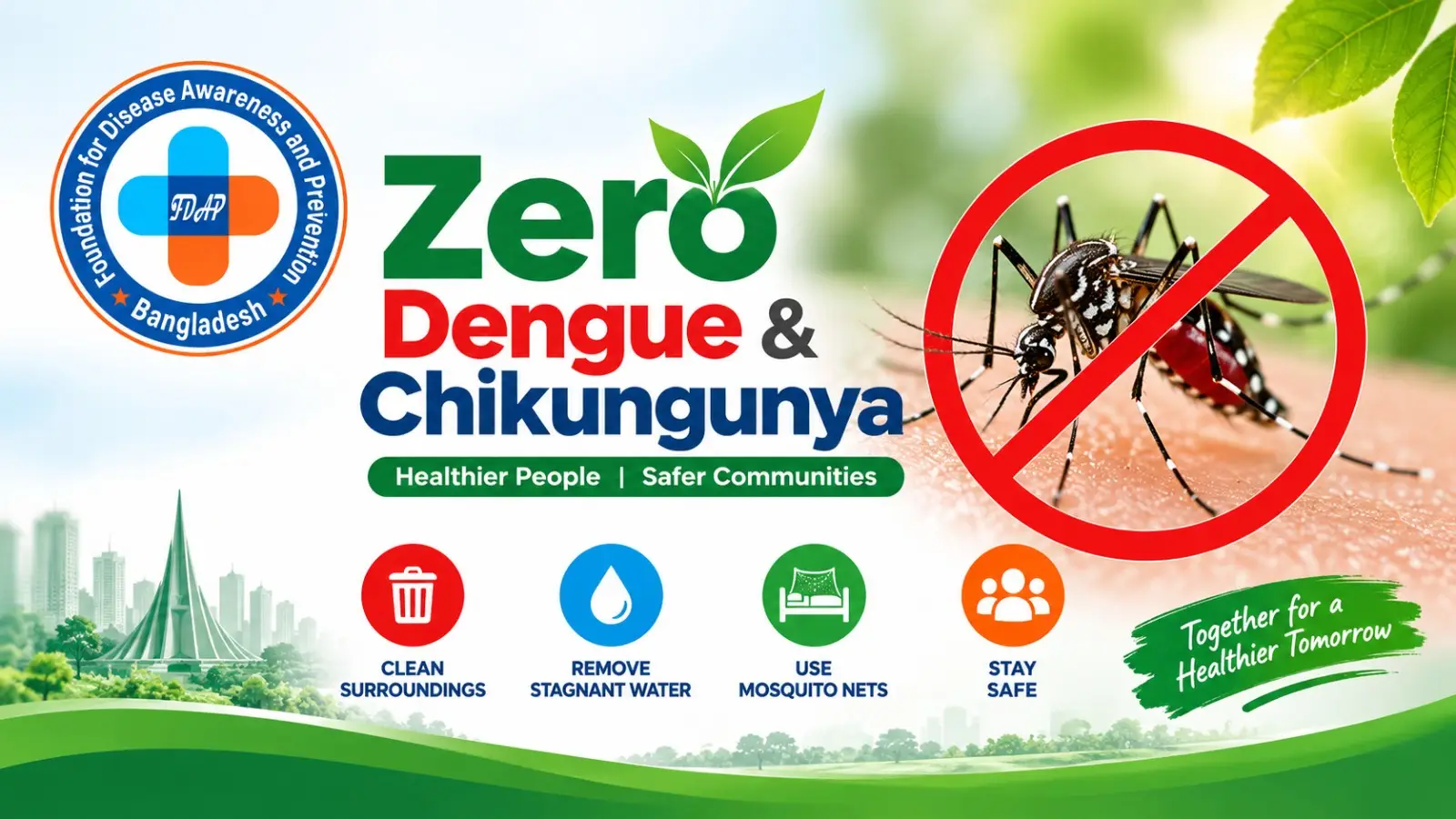
Project Name: Zero Dengue & Chikungunya
Project Duration: 4 Years
Project Start: July 2025
Project End: June 2029
Project Area: Dhaka City, with gradual expansion to other major cities and urban centres, followed by selected rural communities and districts across Bangladesh.
Primary Focus:
Awareness, prevention, vector control, early identification of symptoms and warning signs, mosquito-net distribution for low-income and vulnerable populations, guidance on what to do in case of dengue or chikungunya infection, community engagement, and health guidance.
Target Population:
The general population, with particular focus on children, adults, elderly people, low-income and vulnerable communities, and people living or working in high-risk dengue and chikungunya areas, including:
Project Goal:
To contribute to the prevention and reduction of dengue and chikungunya in Bangladesh through community awareness, mosquito-breeding-site reduction, vector-control measures, personal protection, mosquito-net distribution for vulnerable populations, early recognition of symptoms and warning signs, appropriate guidance on what to do during illness, community participation, and timely health-seeking behaviour.
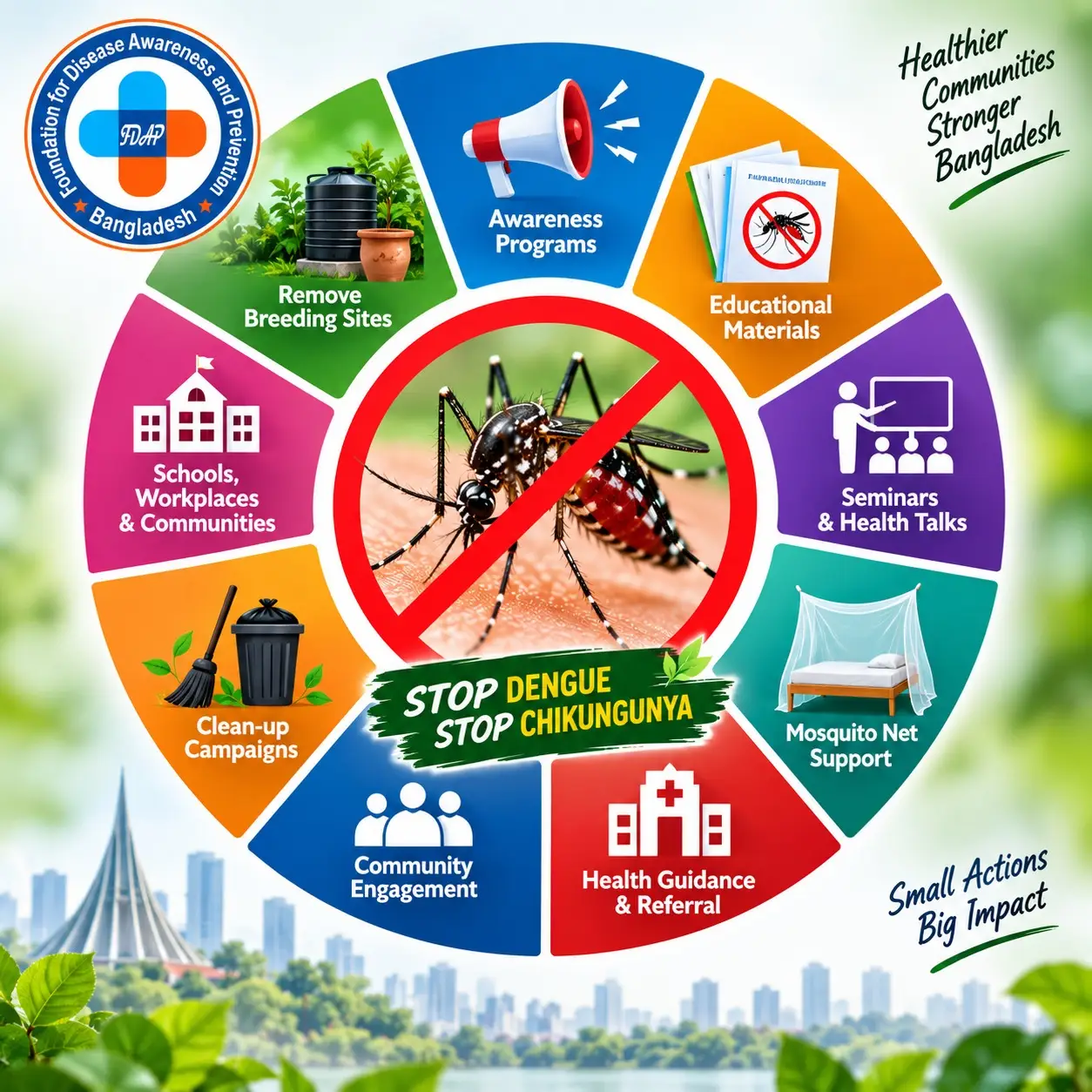
Community Awareness Programs
Conduct community-based awareness programs on dengue and chikungunya, focusing on transmission, mosquito breeding sites, risk factors, prevention methods, symptoms, warning signs, personal protection, and appropriate health-seeking behaviour.
Leaflet & Educational Material Distribution
Prepare and distribute educational leaflets, brochures, posters, banners, stickers, educational cards, and other awareness materials containing simple and practical dengue and chikungunya prevention messages.
Seminars & Health Talks
Organize seminars, health talks, discussion sessions, and public awareness events with qualified doctors, public health professionals, entomology/vector-control experts, and other relevant health professionals.
Dengue & Chikungunya Prevention Campaigns
Conduct targeted prevention campaigns in residential areas, educational institutions, workplaces, markets, factories, community centres, slum areas, and other high-risk locations.
Mosquito Breeding Site Identification
Support community-level identification of potential mosquito breeding sites, including stagnant water in containers, rooftops, construction areas, discarded materials, drains, water storage containers, and other suitable locations.
Community Clean-up & Source Reduction Activities
Organize community clean-up campaigns to remove or reduce mosquito breeding opportunities by promoting proper disposal of waste, removal of stagnant water, covering water containers, cleaning surroundings, and maintaining mosquito-safe environments.
Mosquito Net Distribution for Low-Income & Vulnerable People
Distribute mosquito nets free of cost or through targeted support to low-income families, homeless people, slum residents, children, elderly people, pregnant women, and other vulnerable populations who may have limited access to mosquito protection.
Essential Mosquito Protection Support
Provide basic mosquito-protection materials to selected poor and vulnerable households, based on need and available resources. Support may include mosquito nets, protective materials, covered water-storage containers, educational stickers, prevention kits, and other appropriate low-cost protective items.
Free Health Advice & Guidance
Provide free health guidance on dengue and chikungunya prevention, mosquito-bite protection, symptoms, warning signs, hydration, personal protection, appropriate health-seeking behaviour, and when to seek professional medical care.
School & Educational Institution Awareness
Conduct awareness sessions in schools, colleges, universities, coaching centres, and other educational institutions to educate students, teachers, staff, and parents about mosquito-borne disease prevention and personal protection.
Workplace & Factory Awareness
Engage offices, corporate organizations, factories, construction sites, and industrial areas through awareness sessions, workplace campaigns, environmental checks, mosquito-breeding-site prevention, and preventive education.
Slum & Low-Income Community Outreach
Conduct targeted dengue and chikungunya prevention activities in slums, informal settlements, low-income communities, and other underserved areas where environmental and socioeconomic conditions may increase vulnerability. Activities may include awareness sessions, clean-up campaigns, mosquito-breeding-site identification, health guidance, leaflet distribution, and mosquito-net distribution for eligible households.
Social Media Awareness Campaigns
Use Facebook and other digital platforms to share dengue and chikungunya prevention messages, health tips, educational posts, videos, infographics, live sessions, campaign updates, and seasonal alerts.
Health Awareness Videos & Photo Documentation
Produce educational videos, awareness messages, interviews, photographs, and campaign documentation to promote dengue and chikungunya prevention and reach wider audiences.
Health Talk Shows & Public Discussions
Arrange health talk shows, interviews, live sessions, and public discussions featuring doctors, public health professionals, vector-control experts, and other relevant specialists.
Community Outreach & Engagement
Engage communities, educational institutions, workplaces, local organizations, volunteers, youth groups, community leaders, and local stakeholders in dengue and chikungunya prevention activities.
Volunteer Training & Community Mobilization
Train volunteers and community representatives on basic dengue and chikungunya prevention, identification of potential mosquito breeding sites, awareness communication, household-level prevention, and appropriate referral guidance.
Monitoring & Community Feedback
Monitor project activities, document beneficiaries, record awareness and outreach activities, collect community feedback, and assess the reach and effectiveness of prevention interventions.
Over the four-year project period, FDAP will implement dengue and chikungunya awareness, prevention, community engagement, environmental risk reduction, and health guidance activities across communities and through multiple publics, media, and digital platforms.
Community & Residential Areas
Conduct awareness, household education, clean-up campaigns, mosquito-breeding-site identification, source reduction, leaflet distribution, and mosquito-net support for vulnerable communities.
The project will begin in Dhaka City, gradually expanding to major cities and all districts of Bangladesh, aiming to reach approximately 50,00,000+ (5 million) people over three years, with priority given to high-risk and underserved communities.
Schools, Colleges & Universities
Reach approximately 35,000+ students, teachers, and staff through educational sessions, awareness campaigns, poster activities, and preventive education.
Workplaces & Corporate Organizations
Reach approximately 25,000+ employees and staff through workplace awareness programs, health talks, prevention campaigns, and environmental risk-reduction activities.
Factories & Industrial Areas
Reach approximately 90,000+ workers through awareness sessions, prevention education, community campaigns, and workplace environmental awareness.
Markets & Public Places
Conduct public awareness campaigns, leaflet distribution, health guidance, and prevention activities targeting approximately 50,000+ people.
Community Centres & Local Organizations
Engage approximately 15,000+ community members through health talks, awareness sessions, seminars, clean-up campaigns, and community outreach activities.
Hospitals, Clinics & Healthcare Institutions
Develop partnerships with 50+ healthcare institutions for health education, referral support, professional participation, community awareness, and appropriate guidance for suspected or symptomatic individuals.
Construction Sites & High-Risk Areas
Engage construction workers, site managers, property owners, and local communities to promote prevention and reduction of potential mosquito breeding sites in construction and development areas.
Rural & Urban Communities
Gradually expand project activities to 60+ rural and urban communities across different districts of Bangladesh, based on disease risk, community needs, resources, and partnerships.
Radio & Television
Broadcast health awareness programs, interviews, talk shows, public service messages, and seasonal dengue/chikungunya prevention campaigns to reach a large nationwide audience.
Newspapers & Online News Media
Publish health awareness articles, campaign reports, interviews, prevention messages, and public health information to reach a wider national audience.
Social Media & Digital Platforms
Share awareness posts, educational videos, infographics, prevention tips, campaign content, live sessions, and seasonal awareness messages, targeting 50 million+ digital views/reach over five years.
Community Dengue & Chikungunya Prevention Campaigns
Costs related to community campaigns, field activities, volunteers, local coordination, awareness sessions, prevention materials, and community engagement.
Awareness Seminars & Health Programs
Venue arrangements, sound systems, seating, banners, event materials, refreshments, transportation, professional participation, and other necessary event expenses.
Community Clean-up & Source Reduction Activities
Costs related to community clean-up campaigns, collection and disposal support, protective materials, campaign equipment, volunteer support, transportation, and local coordination.
Educational Materials & Leaflets
Designing, printing, and distributing leaflets, brochures, posters, banners, stickers, educational cards, and other dengue and chikungunya prevention materials.
School & Educational Institution Programs
Costs associated with awareness sessions, educational materials, posters, student engagement activities, teacher orientation, and institutional campaigns.
Social Media & Digital Awareness
Content development, graphic design, educational videos, awareness campaigns, digital promotion, social media communication, and online public engagement.
Health Advice & Guidance
Costs associated with providing free health guidance through doctors, public health professionals, health talks, counselling sessions, community activities, and referral guidance.
Vector Prevention & Environmental Risk Reduction
Costs associated with community-level mosquito breeding-site awareness, environmental assessment activities, source-reduction campaigns, protective equipment, and prevention materials.
Monitoring, Documentation & Reporting
Data collection, activity records, community participation records, photography, videography, monitoring, evaluation, reporting, and project documentation.
Human Resources & Volunteer Support
Support for project coordinators, doctors, public health professionals, trained volunteers, field staff, community mobilizers, and other personnel involved in project implementation.
Transportation & Logistics
Transportation of staff, volunteers, awareness materials, campaign equipment, screening/assessment materials where applicable, and other logistical requirements.
Administrative & Operational Costs
Essential communication, stationery, office support, coordination, documentation, and other reasonable operational expenses.
Indicative 4 Year Budget
Year 1 (July 2025 – June 2026): BDT 70,00,000
Year 2 (July 2026 – June 2027): BDT 85,00,000
Year 3 (July 2027 – June 2028): BDT 90,00,000
Year 4 (July 2028 – June 2029): BDT 95,00,000
Total Estimated Budget (5 Years): BDT 340,00,000
Increased Awareness
Increase public knowledge about dengue and chikungunya, including symptoms, warning signs, transmission, and prevention.
Reduced Mosquito Breeding
Help communities identify and eliminate stagnant water and other potential mosquito breeding sites.
Improved Prevention Practices
Encourage regular use of mosquito nets, personal protection, clean surroundings, and proper water storage.
Early Detection & Treatment
Improve recognition of symptoms and encourage timely medical consultation and appropriate treatment.
Reduced Infections & Outbreaks
Contribute to reducing dengue and chikungunya infections and the risk of seasonal outbreaks.
Fewer Severe Cases & Deaths
Contribute to reducing severe illness, complications, and preventable deaths caused by dengue and chikungunya.
Reduced Treatment Costs
Help reduce treatment expenses and financial burdens on families affected by dengue and chikungunya.
Reduced Healthcare Expenditure
Contribute to reducing the overall healthcare and treatment costs related to dengue and chikungunya in Bangladesh.
Reduced Pressure on Hospitals
Help reduce unnecessary hospital admissions and pressure on healthcare facilities during outbreaks.
Stronger Community Participation
Build stronger community involvement in mosquito control, clean-up activities, and disease prevention.
Protection of Vulnerable Communities
Provide targeted prevention support, including mosquito nets and health guidance, to poor and high-risk populations.
Healthier Communities
Contribute to a healthier, better-informed, and more prevention-conscious population across Bangladesh.
187 Arambag, Motijheel Dhaka – 1000, Banglade
Saturday – Thursday (10.00AM – 5.00 PM)
Closed: Friday and All Government Holidays